Event | From Photo Check-Ins to Brand Experience: How to Design Offline Events People Want to Join
For launches, mall campaigns, and company meetings, the set is only part of the experience. The harder question is how to make people stay, join in, and still remember it afterward.
Photo interaction, generated digital content, themed games, and live screens give offline events more ways to be designed. BIYUTECH builds for these rooms with the AI photo installation and the AI meeting installation.
1. Decide what you want people to do
Goals differ. A launch may care about product awareness and brand image. A mall festival may want traffic and longer dwell. A company party may care about staff participation and atmosphere.
Before designing the interaction, decide the action: take a photo, play a game, learn a product function, or finish a task with other people. Then choose the installation and the format.
2. Lower the barrier with simple rules
On-site events are time-compressed and people move fast. If the rules are complex, visitors leave before they understand them. Keep the rule clear, the feedback immediate, and the steps few.
A QR code can open the page. A photo can return a themed image. A game can show the result on a large screen. Staff can guide more easily when the flow is obvious.
3. Photo interaction connects the room to online
Photo interaction is one of the easier formats to understand and join. Custom backgrounds, frames, brand marks, and digital content turn an ordinary photo into something tied to the theme.
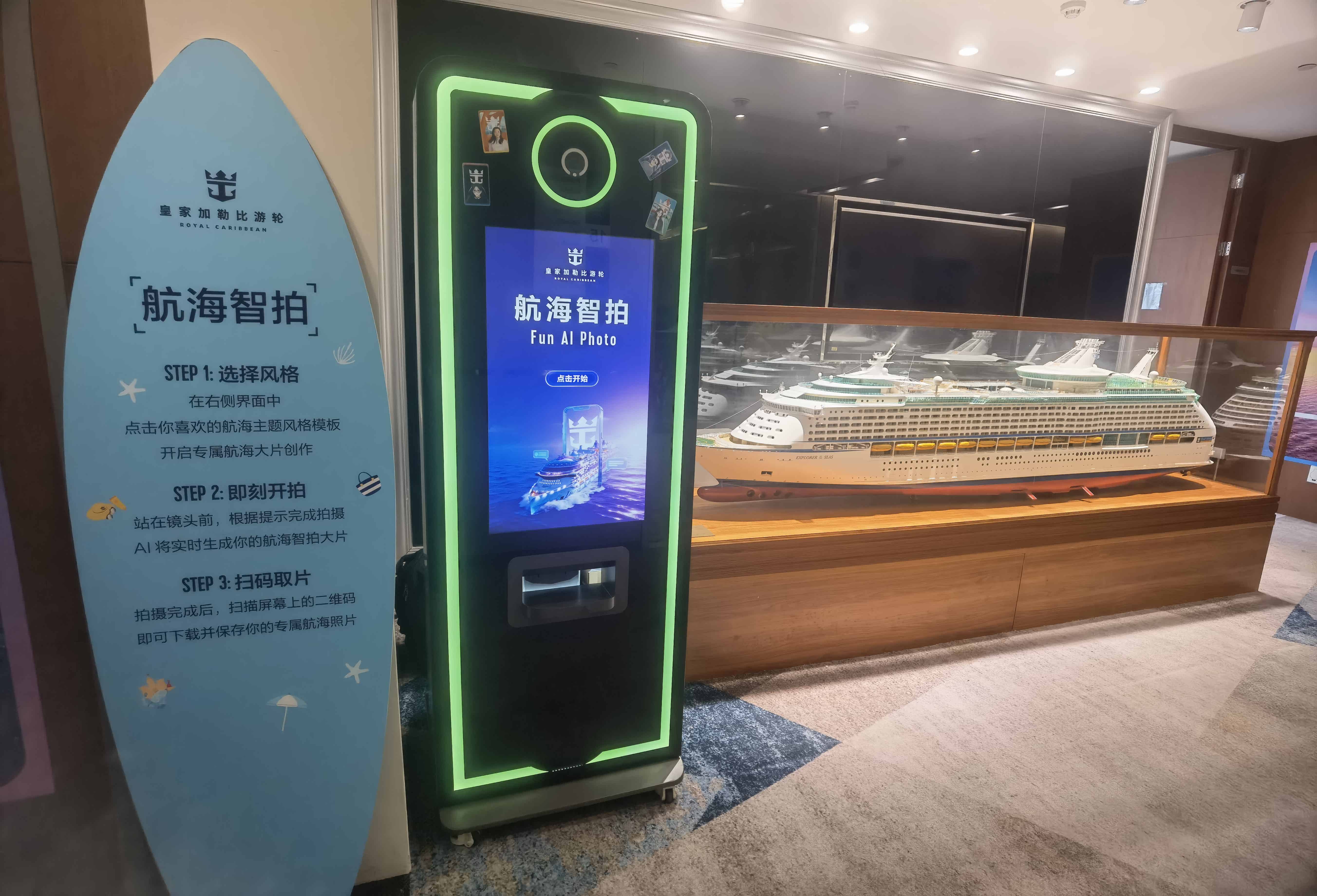
A mall festival can use holiday backgrounds. A launch can feature the product and brand look. A company event can offer a souvenir photo or a themed poster. QR pickup and online sharing extend the visit after the event ends.
Test generation, download, and sharing in advance, and tell people how long photos are kept and how they may be used.
4. Connect the stations
If there are several experiences, one theme and one sequence can link them: check in, enter the interaction zone, take a photo or play, then collect a digital souvenir.
In commercial space, installations, themed display, and digital tasks can lead people through zones. That clarifies the route, but it has to match floor area, crowd size, and the number of devices so queues do not block the space.
5. The technology has to run on the day
The idea also has to work during the event. Photo setups need camera, light, and print or download tests. Large-screen interaction needs resolution, aspect ratio, and control gear checked. QR activities need network, page speed, and scan reliability checked.
Prepare spare equipment, operator notes, and a fault process. A full rehearsal before doors reduces the chance that devices, network, or operation hurt the experience.
A participatory offline event does not require a stack of complex technology. A clear goal, an interaction people understand, one visual system, and reliable execution matter more. When photos, games, digital content, and spatial installations work around the same theme, a display can become a complete brand experience.